Review: It’s a Good Day to Make Some Art SVG
As an embroidery designer who has spent years digitizing patterns and troubleshooting stitch-outs for clients, I approach every new digital embroidery file with a mix of curiosity and skepticism. We have all been there: you download a design that looks crisp on the screen, only to find it turns into a bird’s nest of thread breaks and puckering once it hits the hoop. That is why I took a close look at It s a Good Day to Make Some Art, SVG to see if it holds up in real-world production.
This design falls squarely into the Crafts and Graphics niche, targeting art teachers, creative hobbyists, and makers. But beyond the cute slogan, does it function well as a machine embroidery design? Let’s break down how this asset performs from a technical and aesthetic perspective.
First Impressions and Visual Personality
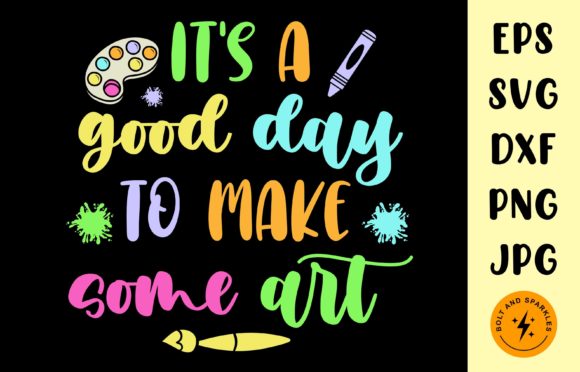
The phrase "It’s a good day to make some art" carries an immediate sense of optimism and creativity. Visually, the layout suggests a balance between playful typography and artistic flair. For an embroidery project, this mood is crucial. You are not just stitching letters; you are conveying a lifestyle. The design feels native to studio spaces, classrooms, and craft rooms. It does not try to be overly ornate, which is often a blessing in embroidery where simplicity translates to cleaner stitch-outs.
When I first loaded the SVG file into my editing software, I looked for clean vector paths. Since the package includes EPS, SVG, DXF, JPG, and PNG formats, it is clearly designed for versatility across cutting machines and embroidery software. However, for embroidery specifically, the transition from vector line to stitch path is where the magic—or the mess—happens. The visual personality here leans towards casual and inviting, making it ideal for custom apparel and home decor rather than formal or corporate branding.
Real-World Application: The Tote Bag Test
To truly evaluate a design, you have to imagine it on a product. I pictured this design stitched onto a heavy canvas tote bag design. This is a popular item for Etsy sellers and small shop products. The length of the phrase means it will likely require a 5x7 or larger hoop, depending on the font size and spacing. On a tote bag, the flat surface allows the text to breathe. I envisioned using a contrasting thread colors palette—perhaps a deep navy or charcoal on natural canvas—to make the message pop without looking chaotic.
Another strong candidate is sweatshirt embroidery. Crewnecks and hoodies are staples for art teachers and students. Here, the fabric texture of the fleece matters. If the design relies heavily on dense fill stitch areas, it could stiffen the garment uncomfortably. However, if the digitizing utilizes a mix of running stitch outlines and lighter fills, it should sit comfortably on the chest or sleeve. I also considered this for personalized gift items like aprons. An apron with this quote stitched near the pocket area creates an instant connection with the user, reinforcing their identity as a creator.
Technical Considerations for Stitching
While the concept is strong, the execution depends entirely on the underlying digitizing. Since this product is sold primarily as a graphic asset (SVG/EPS) with embroidery-compatible files included, you must verify the stitch data. If you are converting the SVG yourself, pay attention to stitch density. Text designs can easily become too dense, leading to fabric puckering, especially on lighter materials.
If you are using the provided embroidery files, always run a test on scrap fabric first. Check how the small details, such as the dots on the "i"s or the curves of the "a"s, hold up. Tiny lettering can disappear under thick threads or merge together if the hoop size is too small relative to the design scale. For curved surfaces like caps, this long phrase might be challenging unless broken into two lines or arched carefully. A straight line of text on a cap brim or front panel requires precise centering and adequate stabilizer to prevent distortion.
Be cautious with dark fabrics. If the design includes fine details, ensure your thread choice provides enough contrast. A printable mockup can help visualize this, but nothing beats a physical test stitch. Also, consider the washability. Items like baby embroidery projects or kitchen towels undergo frequent laundering. Ensure the stitch types used—whether satin stitch borders or internal fills—are secure enough to withstand wear and tear without unraveling.
Commercial Viability and Brand Consistency
For commercial embroidery professionals and craft business owners, this design offers clear value. It taps into the evergreen market of teacher appreciation gifts and artist supplies. When used correctly, it enhances brand consistency for shops that cater to creatives. It signals that you understand your customer’s passion. However, professionalism is key. A sloppy stitch-out reflects poorly on your brand. Ensure that your finished product looks polished. Trim jump stitches, use high-quality threads, and select the right stabilizer for each fabric type.
This design also works well for embroidered patch creation. Patches are trending, and a quote like this fits perfectly on a merit-badge-style patch for art students. In this context, the border definition is critical. A clean satin stitch border can elevate the perceived value of the patch, making it a desirable add-on item for your store.
Designer Notes and Best Practices
- Check Licensing: Before selling items made with It s a Good Day to Make Some Art, SVG, confirm the license terms. Some graphic bundles allow personal use only, while others permit commercial sales of physical goods. Never assume.
- Test on Multiple Fabrics: What looks great on denim might pucker on linen. Always test on the specific material you plan to sell.
- Contrast is King: Use thread colors that stand out against the fabric. Low-contrast combinations can make the text hard to read, defeating the purpose of the message.
- Stabilizer Selection: Use cut-away stabilizer for stretchy fabrics like t-shirts and tear-away for stable woven fabrics like tote bags or aprons.
- Inspect Small Details: Zoom in on the digital file. Are there overlapping nodes or unnecessary anchor points? Clean up the path if necessary before digitizing or stitching.
In conclusion, It s a Good Day to Make Some Art, SVG is a promising asset for designers who understand the nuances of embroidery. It is not just a graphic; it is a statement piece that, when executed with care, can drive engagement and sales for handmade product sellers. By respecting the technical limits of your machine and choosing the right applications, you can turn this simple phrase into a standout item in your portfolio.