Coffee Teacher Repeat: A Designer’s Embroidery Review
As a designer who has spent countless hours digitizing patterns and testing them on everything from flimsy rayon to heavy denim, I approach every new machine embroidery design with a mix of curiosity and skepticism. We have all been there: you download a file that looks crisp on the screen, only to find it puckers the fabric or loses its charm once the needle hits the cloth. Today, I am taking a close look at Coffee Teacher Repeat, evaluating it not just as a digital asset, but as a viable component for real-world embroidery projects.
This review is written for fellow embroidery designers, small business owners, Etsy sellers, and hobbyists who need to know if a design will hold up under the presser foot. While the product description highlights this as a Teacher SVG Cricut T-Shirt digital download with word-by-layer files for cutting machines, my focus here is strictly on how these graphics translate when we move from vinyl cutting to thread stitching. The intersection of Crafts and Graphics is where the magic happens, but only if the execution is sound.
First Impressions: Mood and Visual Personality
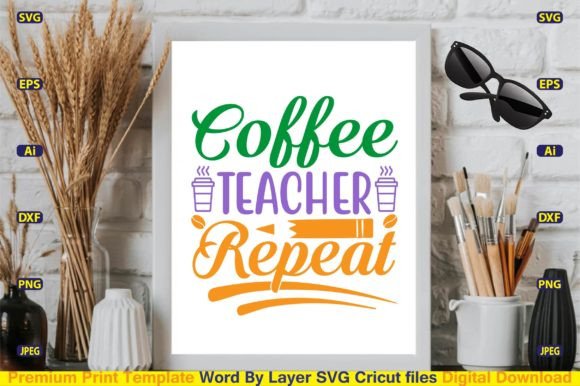
The first thing that strikes me about Coffee Teacher Repeat is its inherent warmth. The theme is instantly recognizable and emotionally resonant. For educators, coffee is not just a beverage; it is a survival tool and a cultural badge. This design captures that sentiment without being overly cliché. The layout suggests a seamless or repeating pattern, which is excellent for creating all-over prints or border accents.
Visually, the design feels balanced. It does not scream for attention with chaotic lines but rather invites a closer look. For an embroidery designer, this is crucial. A design that is too busy can become a nightmare to stitch, resulting in thread breaks and excessive trim time. The clean lines in the preview suggest that if digitized correctly, this could work beautifully as a combination of satin stitch borders and simple fill stitch backgrounds. The mood is professional yet playful, making it suitable for both classroom wear and casual weekend apparel.
Real-World Application: From Screen to Stitch
Let us imagine a realistic scenario. You run a small shop specializing in personalized gifts for educators. It is October, and teachers are looking for comfortable, stylish items that reflect their profession. You decide to use Coffee Teacher Repeat on a high-quality canvas tote bag. This is a classic tote bag design application. Because the pattern repeats, you can scale it to cover the entire front panel or create a subtle band across the bottom.
In this context, the design performs well because it allows for creative color play. You might choose earthy browns and creams for a cozy autumn vibe, or bright, contrasting colors for a more energetic look. The repeat nature means you do not have to worry about perfect centering as much as you would with a single focal image. This reduces production time, a key factor for any craft business aiming for efficiency.
Another strong use case is sweatshirt embroidery. Placing a smaller version of this repeat on the cuff or the back yoke of a teacher’s cardigan adds a sophisticated touch. It moves away from the large, chest-centric logos we often see and offers a more boutique feel. For custom apparel, this subtlety often commands a higher price point because it looks like intentional design rather than mass-produced merchandise.
Technical Considerations and Fabric Compatibility
While the aesthetic is strong, we must address the technical realities of stitching this design. Since the source files are described as SVGs for cutting, you will likely need to ensure you have a properly digitized embroidery file compatible with your machine. If you are converting these graphics yourself, pay close attention to stitch density.
Repeat patterns can quickly become dense if not managed. On thin fabrics, such as lightweight cotton or polyester blends used in t-shirts, high density can cause puckering. I recommend using a cut-away stabilizer for knit fabrics to provide ongoing support after washing. For woven fabrics like linen or canvas, a tear-away stabilizer might suffice, but always test on scrap fabric first.
Be cautious with small hoop sizes. If the repeat element is intricate, shrinking it to fit a 4x4 hoop might cause the details to merge. Tiny lettering or fine lines can get lost in the thread buildup. I advise checking the minimum size recommendation for the specific digitized version you are using. If you are working on curved surfaces, like caps, ensure the design is not too wide, as this can cause distortion during stitching.
Dark fabrics present another challenge. If the design relies on light thread colors against a black navy shirt, you may need an underlay stitch or a backing layer to prevent the fabric color from showing through. This is particularly important for maintaining the clarity of the thread colors and ensuring the design pops.
Commercial Viability and Brand Consistency
For Etsy sellers and small shop product creators, consistency is key. Coffee Teacher Repeat offers a versatile asset that can be adapted across multiple product lines. You can use it on aprons, pillow covers, and even embroidered patches. This versatility helps build brand recognition. When customers see a cohesive style across different items, it builds trust and perceived value.
However, before listing any finished product, you must confirm the licensing terms. The product description mentions "Digital Download Only," but it does not explicitly state commercial usage rights for embroidered goods. Always verify whether the license allows for physical sales. Using a design commercially without proper clearance can lead to serious legal issues. Additionally, since the files are layered SVGs, ensure you are not violating any terms by modifying them for embroidery purposes if the license restricts derivative works.
Practical Designer Notes for Best Results
To get the most out of this design, follow these practical steps:
- Test on Scrap Fabric: Never stitch directly on your final garment. Use a similar fabric weight and type to check for tension issues.
- Check Thread Contrast: View your design in black and white mockups. If the elements blend together in grayscale, they will lack definition in real life.
- Inspect Small Details: Zoom in on the digitized file. Are there unnecessary jump stitches? Is the underlay sufficient?
- Consider Washability: Teachers wash their clothes frequently. Ensure your thread choice is colorfast and your stabilizer choice will not degrade or irritate the skin after multiple washes.
- Mockup Presentation: When creating printable mockup images for your online store, show the design on various items. A flat lay of a tote bag alongside a stitched close-up on a sweatshirt gives customers a better sense of scale and texture.
In conclusion, Coffee Teacher Repeat has strong potential as a versatile design asset for the education market. Its strength lies in its relatability and flexible layout. However, its success depends entirely on proper digitization and thoughtful material selection. By respecting the technical limits of your machine and understanding the needs of your customer, you can transform this graphic into a high-value handmade product that stands out in a crowded marketplace. Whether for holiday embroidery gifts or everyday commercial embroidery stock, this design deserves a spot in your library, provided you take the time to execute it with precision.